
Landscape Stone for Fort Collins Yards
Fort Collins landscapes deal with intense sun, dry conditions, winter freezes, summer storms, and plenty of properties where water use is part of the planning conversation. Stone fits naturally into that environment, especially when it works alongside plants and other landscape materials.
Smaller rock can finish a narrow bed around shrubs or ornamental grasses, while larger stone brings more visual weight to broad planting areas. Flagstone can connect a patio to a garden or side yard, and a well-placed boulder can keep a large space from feeling flat.
Scale is one of the easiest things to misjudge. Material that looks substantial when you are standing next to it at the stone yard can feel surprisingly small once it is spread across a large front yard. Step back and look at the entire project area before deciding what size feels right.
Flagstone for Walkways and Stepping Stones

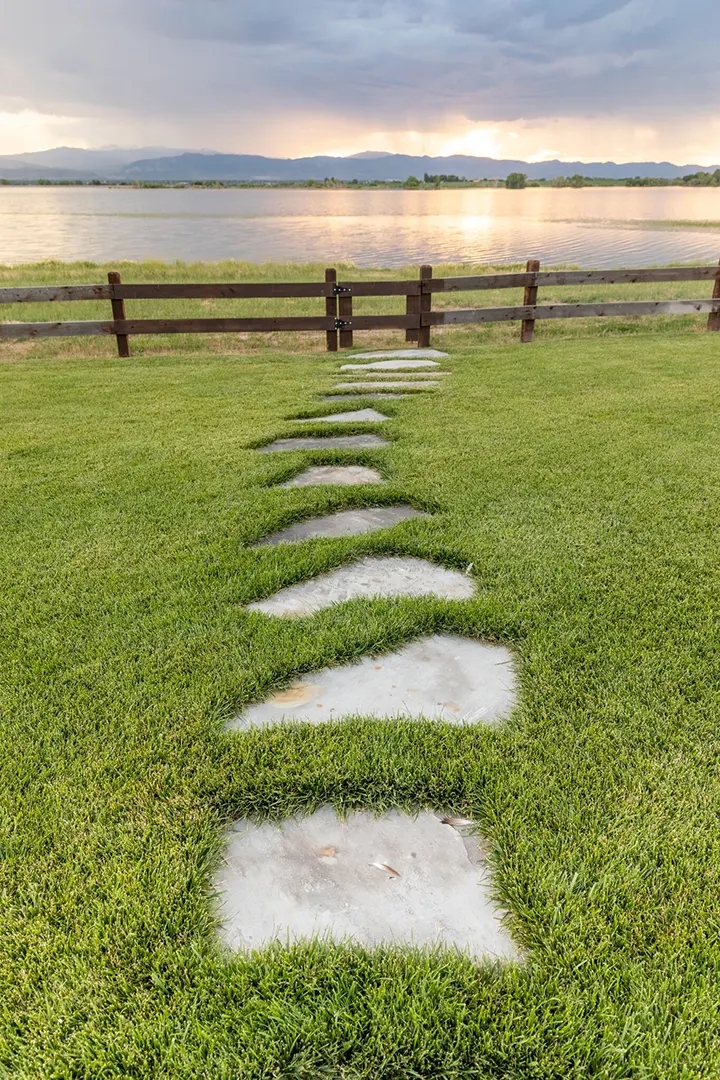
Flagstone works well for garden paths, stepping stones, and other places where you want a broad natural-stone surface.
For anything people will walk on, look beyond color. Surface texture and thickness matter because an attractive stone with a heavily uneven face may be better suited to a planting bed than a regularly used walkway.
Before permanently setting stepping stones, place several on the ground and walk across them at your normal pace. If you have to shorten or stretch your stride to reach each one, the spacing probably needs some adjustment.
Boulders That Feel Like They Belong
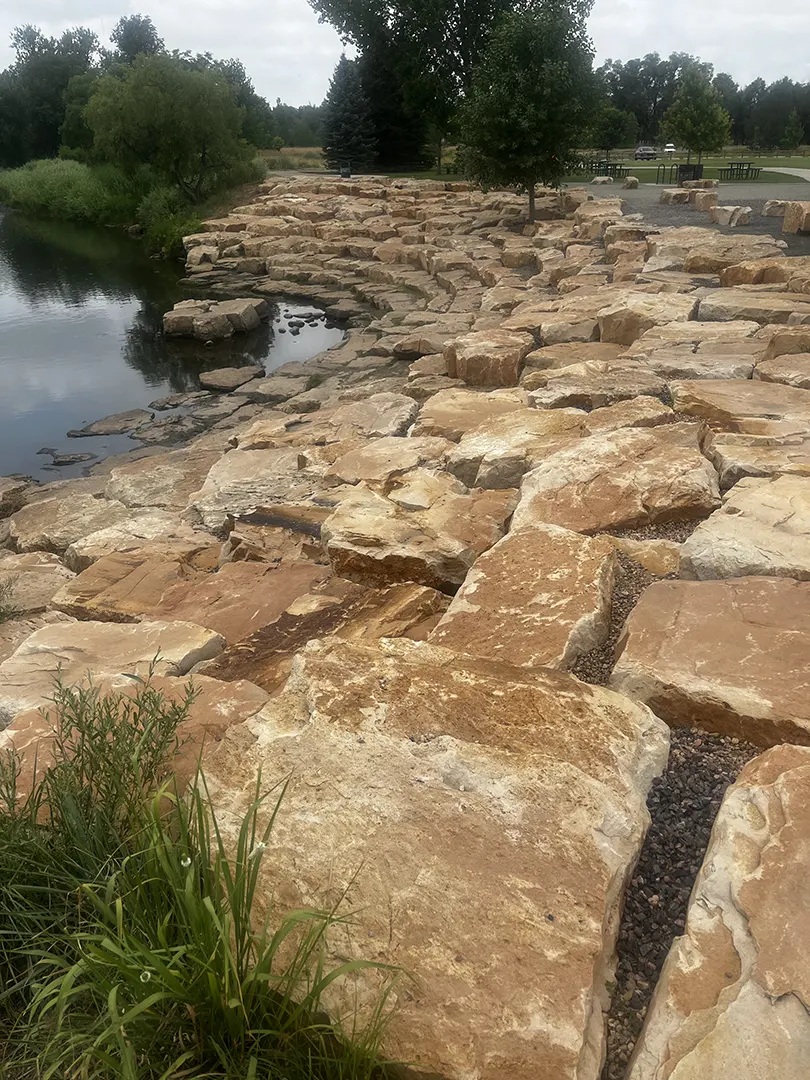
A good landscape boulder should feel settled into the yard rather than dropped on top of it.
The Rock Garden carries natural boulders in different sizes, shapes, colors, and stone types for planting beds, water features, focal points, and larger landscape projects. Since every boulder is different, walk around the piece before choosing it. One side may have more interesting color, a flatter face, or a profile that works better from the house or patio.
Placement matters too. Setting part of the stone below grade and working plants or smaller stone around the base can make it feel much more connected to the landscape.
Large stone also changes the logistics of the project. Gates, fences, finished landscaping, and access for equipment should all be considered before delivery day.
Stone for Garden Walls and Changes in Grade
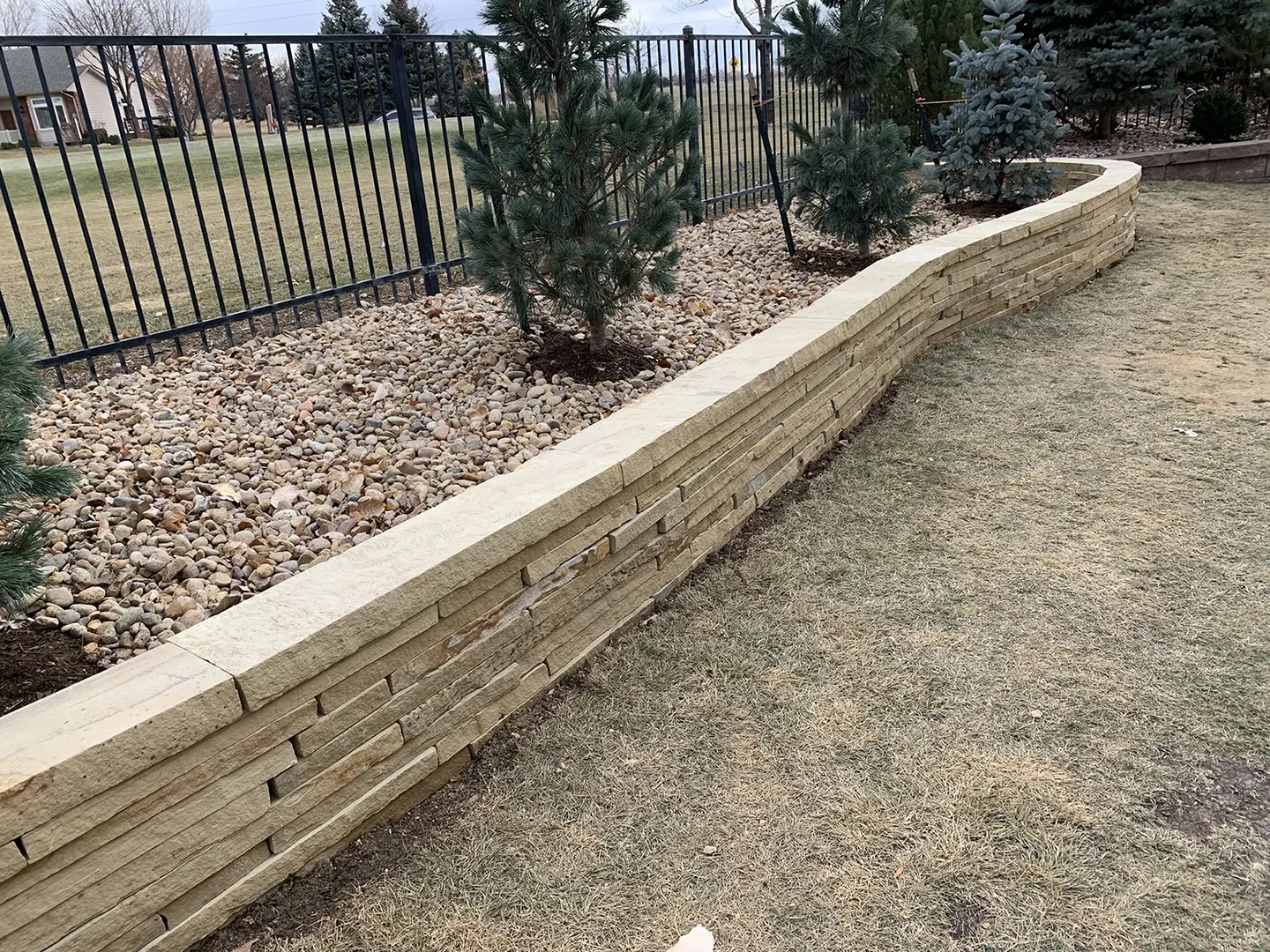
Natural wall stone can be used for garden walls, raised planting areas, edging, and elevation changes.
Start by understanding what the wall needs to do. A low decorative border around a planting bed is very different from a wall holding back several feet of soil. Once a wall becomes structural, base preparation, drainage, soil pressure, height, and construction method become much more important.
The Rock Garden carries walling stone, drystack material, and other natural stone suited to stacked applications. If the project includes capstone as well, looking at the wall and cap materials together can help the finished feature feel more intentional.
Using Landscape Stone Around Plants
Rock beds can give planting areas a clean finish, but they still require some planning.
Think about the mature size of the plants rather than how they look the day they go into the ground. Young shrubs and perennials can look small beside larger stone at first, then grow into the proportions over the next few years.
Heat matters too. Dark stone sitting in full Fort Collins sun can become quite warm, so consider how much reflected heat nearby plants will receive.
Maintenance is another practical consideration. Leaves, pine needles, dirt, and organic material eventually work their way between stones. Smaller rock can be harder to clean with a blower because the material moves along with the debris, while larger rock generally stays in place more easily.
Landscape Stone for Drainage
Natural stone can help a drainage feature feel like part of the landscape instead of a utility trench.
Dry creek beds, swales, downspout areas, and channels carrying stormwater or snowmelt can all incorporate stone. Mixing sizes usually creates a more natural look, with larger pieces anchoring bends or elevation changes and smaller material filling the spaces between them.
The drainage plan still comes first. If water is collecting beside the foundation, washing soil away, or heading toward a neighboring property, covering the area with rock will not correct the underlying grade. Figure out where the water needs to go, then choose stone that works with that plan.
How Much Landscape Stone Do You Need?
Basic measurements will give you a good starting point before visiting the stone yard.
Measure the length and width of the area, and divide irregular spaces into smaller sections when needed. For bulk material, a useful starting formula is:
Square feet × depth in inches ÷ 324 = approximate cubic yards
For example, 300 square feet covered 3 inches deep works out to about 2.8 cubic yards.
Treat that as an estimate rather than a final order. Different materials have different densities, and flagstone, wall stone, boulders, and individual pieces are calculated differently from loose rock. Bring your measurements when you visit The Rock Garden so the quantity can be discussed around the specific material you choose.
Match the Stone to the Property
Stone does not exist by itself once it gets home.
Brick, siding, stucco, concrete, pavers, decking, retaining walls, plants, and existing stone can all influence how a new material looks. A warm-colored stone may read differently beside natural wood than it does against gray concrete.
Take a wide photo of the project area along with closer pictures of the materials the new stone will sit beside. If you have a physical sample of a paver, brick, siding color, or other finish, bring it with you.
The goal is to choose stone that works with the property as a whole.
Custom Stone Fabrication
Some projects need a piece of stone to fit a specific dimension rather than designing the project around whatever piece happens to be available.
The Rock Garden offers custom stone fabrication for landscape and architectural applications. That can be useful for steps, caps, hearth pieces, water features, and other projects where the thickness, edge, opening, or dimensions need to be more precise.
Bring measurements, drawings, templates, or project plans when available. Good information before fabrication makes it much easier to prepare the right piece.
See Landscape Stone at The Rock Garden
Natural stone is worth seeing at full scale because color, texture, shape, and surface variation can be difficult to judge from a photograph.
The Rock Garden in Fort Collins gives homeowners and trade professionals the opportunity to compare flagstone, boulders, wall stone, landscape stone, capstone, and other natural materials in person.
Bring project measurements, photos, plans, and material samples if you have them. Look at the stone up close, then take a few steps back and consider how its size, color, and character will feel once it is part of the landscape.
The Rock Garden
167 Spaulding Lane
Fort Collins, CO 80524
970-472-1115
therockgarden.com
Landscape Stone in Fort Collins FAQs
What is the best landscape stone for planting beds?
The best landscape stone for a planting bed depends on the size of the bed, surrounding plants, sun exposure, and the amount of maintenance you want to do. Smaller stone creates a tighter surface, while larger rock adds more texture and usually stays in place better during cleanup.
What stone works well for a walkway?
Flat natural stone or flagstone works well for garden paths and stepping-stone walkways. Look closely at surface texture and thickness because those details affect how stable and comfortable the path feels underfoot.
Can landscape stone be used for drainage?
Yes, landscape stone can be used in dry creek beds, swales, downspout areas, and drainage channels. The grading and water path should be worked out first so the stone supports the drainage plan rather than covering an unresolved problem.
How do I know how much landscape stone to buy?
Measure the square footage of the project and determine the depth of stone you plan to install. The final quantity will depend on the specific material, density, and type of stone you choose.
Can The Rock Garden custom cut landscape stone?
Yes, The Rock Garden offers custom stone fabrication for projects that require specific dimensions or details. Steps, caps, water features, hearth pieces, and architectural stone are examples where custom fabrication may be useful.
Should I see landscape stone before ordering?
Yes, seeing landscape stone in person helps you judge its true color, size, texture, shape, and natural variation. Comparing several options together also makes it easier to understand how the material will look across a larger area.