
Start With the Structure Underneath
Choosing a capstone starts with knowing what it needs to cover.
Measure the finished width of the wall along with the total length. Note any corners, curves, columns, changes in wall width, or other details that affect the layout. If masonry has already been installed, measure the finished structure rather than relying entirely on dimensions from an older set of plans.
Most capstones extend beyond the face of the wall to create an overhang. The amount of projection affects both the appearance and the dimensions of the stone, so decide on that detail before ordering or having pieces cut.
Consistency becomes especially important across long walls or a series of columns. Small differences in overhang can become surprisingly noticeable once everything is viewed together.
Cap Stone for Seat Walls
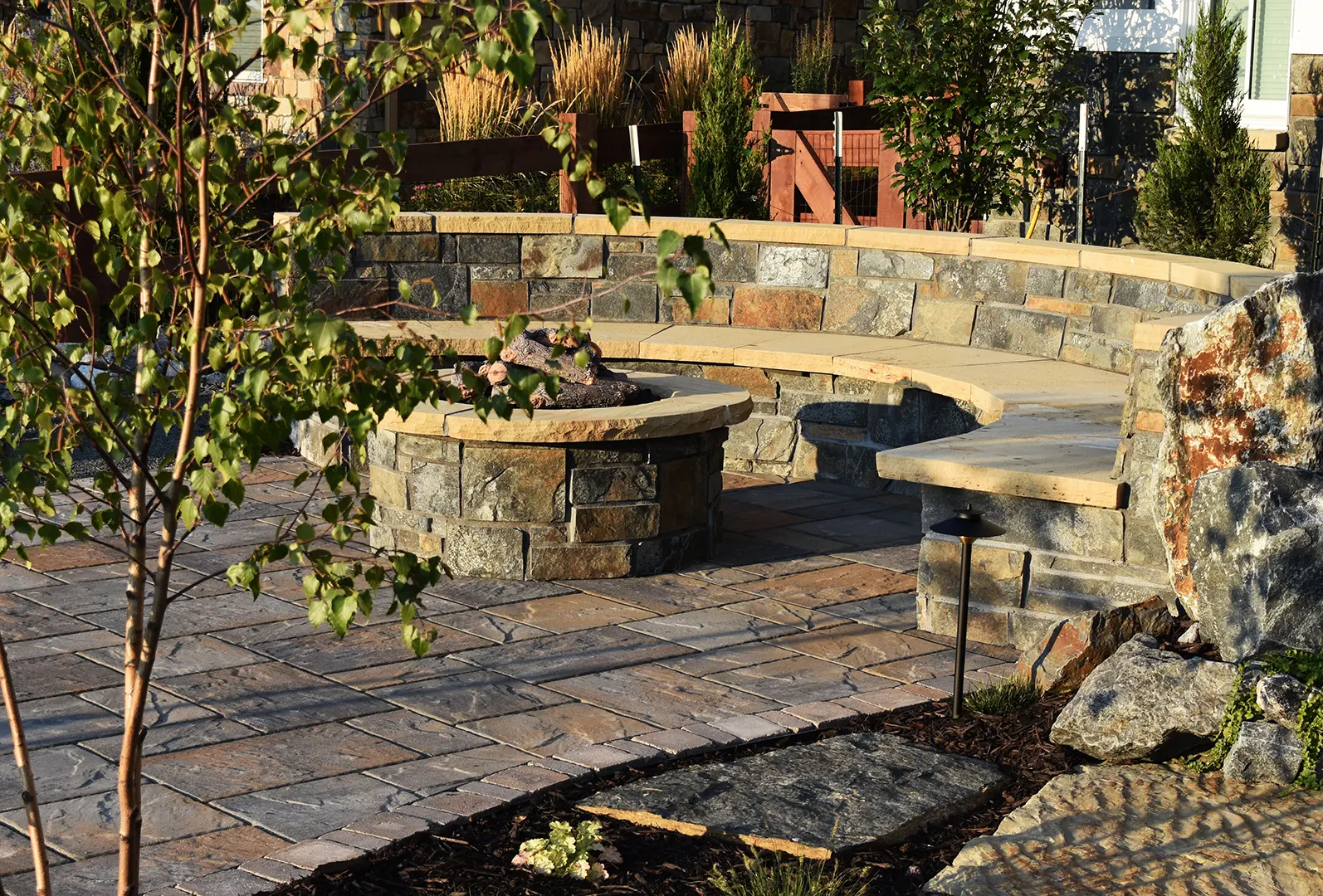
A seat wall needs a cap that feels comfortable as well as looks right.
Pay attention to surface texture, width, joints, and edge treatment because people will come into direct contact with the stone. A heavily irregular surface might work beautifully on a garden wall but feel less comfortable on a wall designed for sitting.
Remember that the cap also contributes to the final seat height. Include its thickness when planning the masonry underneath rather than treating it as an extra layer at the end of the project.
Longer cap pieces can reduce the number of joints and create a cleaner line across a seat wall. Larger pieces are also heavier, so access and installation should be considered before settling on dimensions.
Cap Stone for Raised Beds and Garden Walls

Raised beds and low garden walls put the top of the masonry directly in view, making the proportions of the cap especially important.
A very thin cap can feel undersized on a substantial stone wall, while an oversized piece can overpower a smaller garden feature. Look at the wall as a whole and choose dimensions that feel appropriate for its height, width, and surrounding landscape.
Nearby materials can help guide the selection. If a raised bed sits beside a flagstone patio or natural stone walkway, the capstone can share a color, undertone, or texture with the paving without matching it exactly.
The Rock Garden carries capstone alongside flagstone, landscape stone, veneer, boulders, and other natural stone products, which makes it easier to look at several parts of the project together.
Column and Pillar Caps

Column caps are visible from several directions, so size and overhang become particularly noticeable.
Measure both dimensions of the finished column and decide how much projection you want on every exposed side. When several columns appear together along an entry, patio, fence, or driveway, keeping those dimensions consistent helps them feel like parts of the same design.
Color and markings can still vary naturally from one piece to another. Look at several caps together when possible so the variation feels balanced across the project.
Plan for Corners and Curves
Straight walls are fairly simple to lay out, while corners and curved walls require more planning.
At a corner, consider how the cap pieces will meet and where the joint will fall. Curved walls may require pieces to be cut or shaped so the joints follow the radius without opening dramatically along one side.
A basic drawing can be extremely useful. Show wall widths, overall lengths, corners, curves, columns, and the intended overhang. It does not need to be an architectural plan to provide useful information.
Custom-Cut Cap Stone
Standard dimensions do not work for every project, especially when masonry has already been built or the design includes unusual wall widths, large columns, curves, or specific overhang requirements.
The Rock Garden offers custom stone fabrication for projects that require cap stone cut to particular dimensions. Custom cutting can allow the stone to fit the masonry instead of changing the design around whatever standard size happens to be available.
Accurate measurements matter before custom pieces are fabricated. For columns, measure both directions and check the finished structure. For walls, note any changes in width, corners, or other conditions that could affect individual pieces.
Bring measurements, drawings, elevations, or templates when available so the fabrication requirements can be evaluated before the stone is cut.
Color and Texture Should Work With the Wall

Cap stone does not need to exactly match the masonry underneath it.
A lighter cap can create a clean finishing line above darker stone, while a deeper color can add visual weight to a lighter wall. Looking at undertones usually gives you more flexibility than trying to find an exact color match.
Texture matters too. A smoother, more consistent surface may suit masonry with clean lines, while stronger natural texture can complement a more rustic wall.
Look at full pieces whenever possible. Natural stone varies in color, markings, surface texture, and edge character, and those differences are easier to understand when several stones are viewed together.
Plan for Northern Colorado Weather
Cap stone sits at the top of the structure, where it receives direct exposure to rain, snow, melting ice, sunlight, and repeated temperature changes.
The design and installation should avoid obvious areas where water can continually collect. Projection, joints, surface shape, and the masonry underneath all influence how moisture behaves once it reaches the top of the wall.
Fort Collins freeze-thaw conditions also make proper exterior installation important. Work with a qualified mason or installer who understands natural stone, water management, mortar, and exterior masonry in Northern Colorado.
What to Bring When Shopping for Cap Stone
A few measurements can make your visit much more productive. Bring the finished wall width, total length, desired overhang, number of corners, column dimensions, curves, and approximate number of individual sections involved.
Photos help too. Take at least one wide image showing the entire wall or feature and a few closer photos of the masonry the cap will sit on. If the cap needs to coordinate with veneer, flagstone, pavers, siding, or another material, bring a sample or photograph of that as well.
For more complicated projects, a simple sketch showing the layout can be especially helpful.
See Natural Capstone at The Rock Garden
Natural stone is easier to choose when you can see the full material rather than relying on a small photograph or sample.
The Rock Garden in Fort Collins carries natural capstone for seat walls, garden walls, raised beds, columns, pillars, and other masonry projects. You can compare surface textures, thicknesses, edges, colors, and complete pieces while also looking at veneer, flagstone, hearth stone, landscape stone, and other materials that may be used elsewhere on the property.
If the project requires custom dimensions, bring your measurements and drawings so the team can help determine what needs to be fabricated.
The Rock Garden
167 Spaulding Lane
Fort Collins, CO 80524
970-472-1115
therockgarden.com
Cap Stone in Fort Collins FAQs
How wide should cap stone be?
Cap stone should be wide enough to cover the finished wall and provide the desired overhang on each exposed side. Measure the completed wall first, then add the planned projection to determine the appropriate cap width.
What should I look for when choosing cap stone for a seat wall?
Choose seat-wall capstone based on comfortable width, surface texture, joint layout, and edge shape. Include the thickness of the cap when determining the final sitting height.
Does cap stone need to match the wall stone?
No, capstone does not need to exactly match the stone or masonry underneath it. Compatible undertones, texture, scale, and surrounding hardscape materials can create a natural connection without making everything identical.
Can cap stone be cut for a specific wall or column?
Yes, The Rock Garden offers custom stone fabrication for projects requiring specific capstone dimensions. Accurate finished measurements are important before custom pieces are cut.
Can cap stone be used on curved walls?
Yes, natural capstone can be used on curved walls, although individual pieces may need to be cut or shaped to follow the radius. Bring the wall dimensions and a drawing of the curve when discussing the project.
Should I see natural capstone before ordering?
Yes, seeing natural cap stone in person helps you evaluate its color, texture, thickness, markings, and edge character before ordering. Looking at several pieces together is especially useful for long walls or projects with multiple columns.